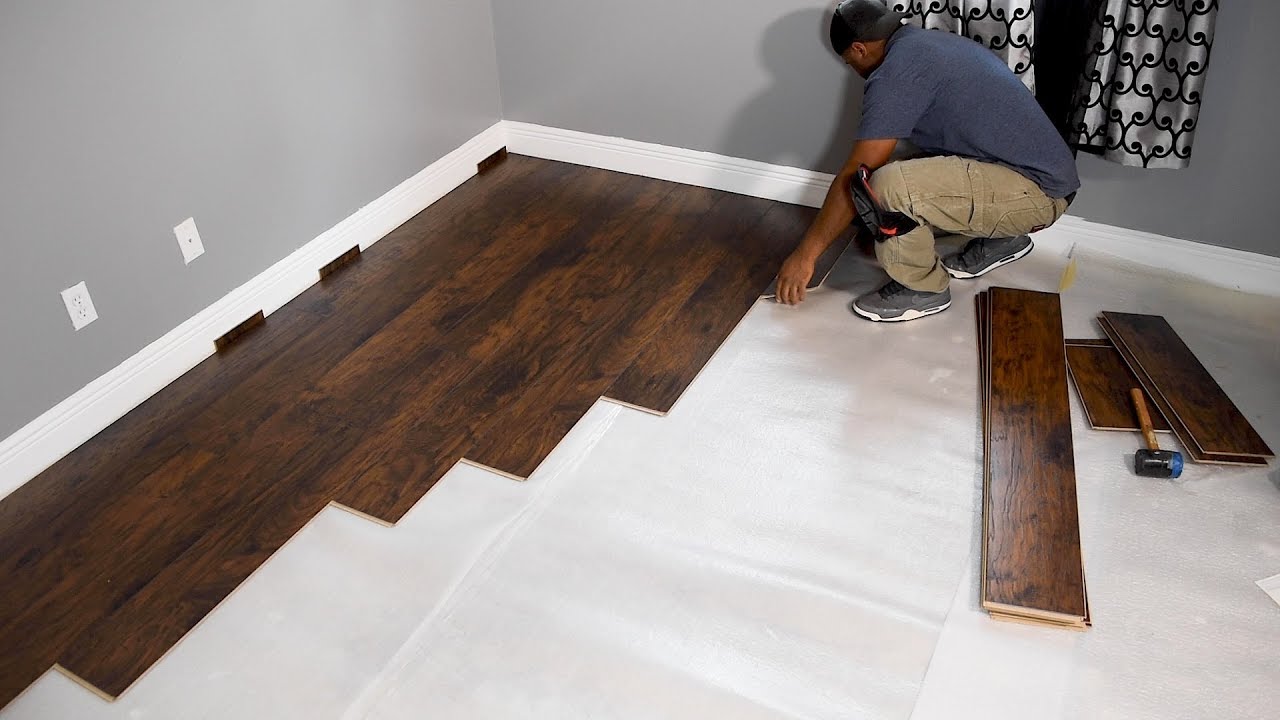
20 Good Reasons For Deciding On Floor Installation
Wiki Article
Nail Down Vs. Glue Down Vs. Floating Hardwood Explained
If you ask three flooring contractors in Philadelphia how hardwood should be installed and you may get three distinct answers -- not because they are wrong, however the correct installation method genuinely is based on the unique circumstances of the home you live in. The type of subfloor you choose, the floor's height, the wood species, the climate, and your long-term plans for the space all factor into the final decision. Many homeowners only discover this only after the fact that's why it's crucial to know the difference before you get estimates. Here's how each approach actually operates and when each is appropriate.
1. Nail-Down is the Standard for Solid Hardwood
Nail-down, also called staple-down, involves the mechanical attachment of each plank of hardwood to a wood subfloor using the pneumatic nailer. It's the oldest that is still the standard method of installing solid wood in Philadelphia houses with plywood or OSB subfloors. The connection is firm, it feels solid underfoot, and there's no adhesive to break over time. The majority of flooring professionals will opt to nail-down for solid hardwood in above-grade wood subfloors, without a second thought.
2. Your Subfloor Determines Whether Nail-Down is even an option
Flooring that nail down wood requires a wood underfloor -fully stop. Concrete slabs that can be found within basements and in certain ground-floor areas of Philadelphia homes and Delaware County ranches, cannot take staples or nail nails in any meaningful way. If your subfloor is constructed of concrete, nail-down is off the table, regardless of the flooring material you'd like. A licensed flooring installer can be able to tell this right away during a visit to the site; however, an unexperienced one may not recognize it until after the work has begun.
3. This Glue-Down Technique Opens Up Concrete Installations
Glue-down hardwood installation utilizes an adhesive that is spread across the subfloor before planks are pressed into place. This is the preferred option when you're looking to put real hardwood on top of concrete -- basements in Montgomery County colonials, ground-floor slabs found in newer South Jersey construction, or any space where nail-down isn't an option. When it's done correctly a glue-down flooring is extremely sturdy and offers a low amount of flex. However, removal afterward is much more laborious in comparison to pulling up a nail flooring or floating one.
4. Floating Hardwood Doesn't connect to the Subfloor in any way
Floating installation implies that the planks join at the edges. They are placed on over the subfloor as one piece of flooring, moving together, rather than being fixed. It's less time-consuming to install, more easy to remove, and more accommodating to imperfections in the subfloor than nail-down. Engineered wood is the best possibility for floating installation in Philadelphia as its layered structure is able to handle any slight movement that can occur with floating installations better than solid wood.
5. Floating floors offer a distinctive Feel underfoot
This is something that the showroom visits don't always convey. Floating hardwood exhibits a slight feeling of movement when you walk upon it -- not dramatic yet noticeable when compared to a nail-down floor that's locked onto the subfloor. For most homeowners, it's a non-issue. Some, in particular people who are replacing old nail-down hardwoods, there is an adjustment. If this is a concern, ask your flooring installer whether you are able to walk around an unfinished floor prior to taking a decision.
6. Nail Down is the laboriest The Three Costs of Nail-Down
From an installation standpoint nail-down hardwood needs the longest time and requires the most skill this is evident in the labor quotes you'll get from Philadelphia flooring contractors. The subfloor should be clean with a flat surface and be thick. Planks need to be acclimated. The nailer should be careful in order to avoid splitting. Flooring installers who nail down well are earning their rate. If you get a low hardwood installation cost you should inquire how they'll fasten it.
7. The Glue Down process increases the cost of materials However, it can also cut down on certain labor Variables
Adhesive can be expensive, and glue-down applications require the appropriate product to match the subfloor and hardwood combination. In the end, glue-down construction over concrete slabs that have been prepared can go faster than nail-down over subfloors that require substantial repair. Flooring contractors across Bucks County and Delaware County typically suggest glue-down for engineered timber in slabs-on-grade construction specifically since it brings real aesthetics of wood with practical benefits.
8. Moisture Testing should be conducted prior to Any Method is Picked
This step is usually skipped when doing budget jobs and causes problems in the course of a year. Concrete slabs emit moisture vapor in excess, and this can cause glue-down adhesives and floating floors to buckle. Wood floors in older Philadelphia rowhomes may be prone to higher levels of moisture in crawlspaces due to poor ventilation. A proper moisture reading before installation isn't something you can do without -it's how a skilled flooring professional decides if a particular method is safe and what prep task is required prior to.
9. Refinishing Compatibility varies based on Method
Nail-down solid hardwood can typically be sanded as well as refinished several times during its lifetime- it's one of the best arguments for choosing it despite the more expensive price of installation. The majority of glue-down engineered hardwoods can get refinished either twice or three times dependent on the thickness of the wear layer. In the case of floating engineered wood, it may have a lower refinishing capability. If long-term wood floor restoration is in your agenda include this into the technique decision prior to installation, not later.
10. A better method is to make an a Site-Based Decision, not a Preference Choice
Homeowners may attend flooring consultations with a predetermined concept of what type of installation they would like to use. Highly experienced flooring contractors in Philadelphia are able to gently redirect that conversation to the type of home's needs are. The best flooring companies aren't soliciting a certain way of doing things -they're studying your subfloor's moisture levels and your floor's levels and the species of wood you have and will recommend accordingly. This type of site-specific analysis is what sets a certified professional and someone who owns nailers. Take a look at the recommended
tile flooring contractors Philadelphia PA for website examples including laminate floor contractors Philadelphia, tile flooring contractors Philadelphia PA, engineered hardwood installation Philadelphia, glue down hardwood flooring Philadelphia, luxury vinyl flooring Philadelphia, LVP flooring Philadelphia PA, hardwood floor installation cost Philadelphia, affordable flooring installation Philadelphia, LVP flooring contractors Philadelphia, hardwood floor resurfacing Philadelphia and more.
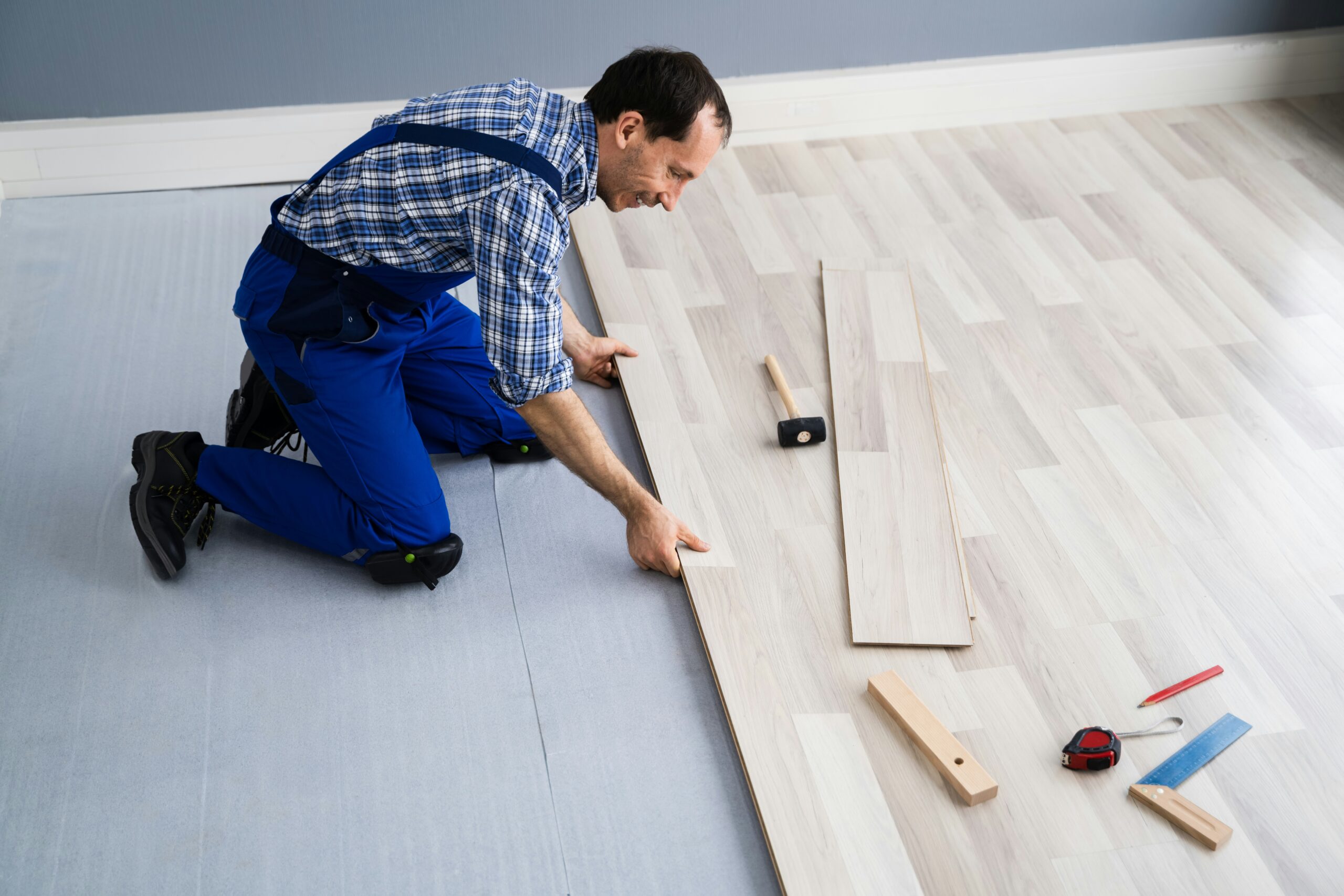
Waterproof Flooring Options For Philadelphia Bathrooms
Bathrooms are the ones where flooring decisions have the least margin for error. In every other room of the Philadelphia house can handle the use of a flooring material that is water-resistant but a bathroom can't. Showers that are awash with steam, water around the base of the toilet or splash zones near sinks as well as the general humidity that creates in a bathroom can expose any weakness in flooring but it's still not waterproof. Philadelphia houses have additional problems such as subfloors with a history that already carry moisture as well as bathrooms that were not modernized since the 1970s, as well as in many rowhomes bathrooms are set over a finished living spaces where a flooring issue could lead to an issue with the ceiling. What actually works, what doesn't and the questions to ask before you put a bathroom floor in.
1. Porcelain Tile remains the Benchmark Every Other Surface is Compared
There's the reason that porcelain tile has been the primary bathroom flooring for a long time It is impervious against water at the tile's edge, able to handle humidity and steam without deteriorating and, with the proper installation and grout sealing it can far outlast other flooring options in the presence of water. Porcelain tile installation in Philadelphia bathrooms is the one with the longest-running track record. There are a few downsidescold underfoot, difficult on joints, grout maintenance necessary -- but none of the other materials can compete with its waterproofing capabilities and long-lasting durability within the bathroom.
2. Ceramic Tile Is a Legitimate Moving Step, It's not an Alternative to Ceramic Tile
The terms porcelain and ceramic are frequently talked about interchangeably, but they're not the same product for bathroom use. More porous is ceramic than porcelain, and this can be a problem in a bathroom where moisture is constant rather than frequent. In a powder room or a guest bathroom for guests that are not frequently used, ceramic tile flooring is a viable and less expensive option. In a bathroom used as a primary in the Philadelphia home that gets daily shower use, the density and resistance to moisture is more than worth the cost to the square foot. The process of installing it is similar but the performance over time isn't.
3. LVP is the Most Practical Option for Waterproofing Tile
The premium vinyl plank has made its mark in bathroom flooring conversations. The flooring itself is 100% waterproof. The main does not absorb water, and the surface doesn't degrade when exposed to exposure to moisture and it's warmer and more comfortable than tiles. The major caveat when installing in bathrooms is that the waterproofing of LVP applies to the planks itself, however, it is not required to seal the seams between them. In a bathroom that has significant exposure to water -- such as a walk-in tub without a barrier, or a freestanding tub or a tub that is not properly sealed, water can move across planks until it get to the subfloor in time. An appropriate installation technique and seam sealing matter here more than any other room.
4. Laminate in the Bathroom is a choice you'll regret
This should be said in a clear manner since laminate shows among bathroom flooring plans usually on the strength of its lower price point. Laminate includes a wood-fiber center. Wood fiber and continuous bathroom moisture are incompatible. The edges expand, gaps expand, the layer separates, and decay accelerates in bathrooms more quickly than any other room in the house. Flooring that is cheap and puts laminate in a Philadelphia bathroom is not cost-effective, it's an installation that's been delayed for a few years. Any flooring installer who recommends laminate for a bathroom that is not a main one should be asked what the reasoning behind it is.
5. The Subfloor underneath a Philadelphia Bathroom is in need of an honest assessment
Older Philadelphia rowhomes and suburban colonials usually have bath subfloors containing water history, such as previous leak staining, soft spots resulting from decades of exposure to water or original wooden subfloors that have held more water than they are required to absorb over time. Installing new, waterproof flooring over a subfloor that's damaged won't fix the root of the issue, but covers it while it continues to weaken. Repairing the subfloor in Philadelphia bathrooms before new flooring is put in place isn't an offer to sell, it's a requirement for a new flooring to work properly and not fail too early.
6. The floor heating compatibility varies according to Material
Heating floors on bathrooms -- which is becoming used among homeowners in Montgomery County and Delaware County home renovations -- isn't suitable for all flooring materials. Porcelain tile carries and stores the heat efficiently, which makes it a perfect floor for an unheated subfloor. LVP is suitable for radiant heating, but there are temperature thresholds which need to be observed -- excessive heat could cause dimensional instability. If bathroom floor heating is part of your renovation, the flooring material selection as well as the heating system's specifications have to work in tandem together, not independently.
7. Bathroom Tile Layout Impacts Both Design and Water Management
This is a distinction that sets apart experienced tile flooring contractors from installers who simply know how to set tile. Bathroom floors require slightly inclined towards the drain, usually 1/4 inch per ftfor the purpose of preventing standing water. Tile layout that doesn't account specifically for the pitch, or that is fought against with large-format tiles that span the slope, creates issues with pooling, which eventually work through the subfloor. The discussions with your contractor should cover how the tile pattern interacts with the drain's location, not just how it looks on paper.
8. The choice of bathroom grout is a Decision for Functional Purposes
Standard sanded tile in the bathroom must be sealed prior to the installation stage and periodically resealing throughout its lifespan. Epoxy grout -- which is more dense to install, more costly and less durable to installis completely impervious staining or moisture and does not require sealing. For Philadelphia bathtub tile work in which homeowners prefer minimal maintenance epoxy grout can be worth the additional labor cost. For those who will be committing to regular maintenance of their grouts, standard grout sealed perfectly. What's not effective is grout that's not properly sealed in a moist bathroom atmosphere.
9. Small Format Tiles Help Bathroom Floors Slopes Better
The current trend of large-format tile, 24x24 or larger -- which works well in living spaces and kitchens presents practical issues for bathrooms. Larger tiles can be difficult to pitch toward drains without creating noticeable unevenness. They also require subfloors that are extremely flat to avoid lippage. Smaller-sized format tiles such as 12x12 or less and, in particular, mosaic tiles -- follow the contours of the bathroom flooring more naturally. They also manage the drain slope with more ease and give greater grout lines, which increase the resistance to slip when wet. Philadelphia tile flooring professionals who have extensive experience in bathroom design will raise this conversation before layout decisions are finalized.
10. Bathroom Floor and Wall Tiles Must Be Specified Together
A mistake can lead to aesthetic regret more than functional problems. However, it's important to avoid in both ways. Tiles for the bathroom floor and wall tile interact visually in narrow space in ways which are difficult to see from samples alone. Pattern direction, scale, grout color, as well the finish all must be taken into consideration together. Contractors in flooring who also handle the installation of bathroom tiles Philadelphia work can collaborate on this. Contractors who deal with only the floor and hand over wall tiles to a different contractor can result in situations where the finished space appears like two people took decisions independently -- because they did. Take a look at the most popular Read the recommended floor installation Delaware County PA for website advice including floor sanding and refinishing Philadelphia, laminate floor contractors Philadelphia, flooring installation near me Philadelphia, LVP flooring Philadelphia PA, hardwood flooring Montgomery County, laminate floor contractors Philadelphia, cheap flooring installation Philadelphia, free flooring estimate Philadelphia, LVP floor installation cost Philadelphia, kitchen tile flooring Philadelphia and more.